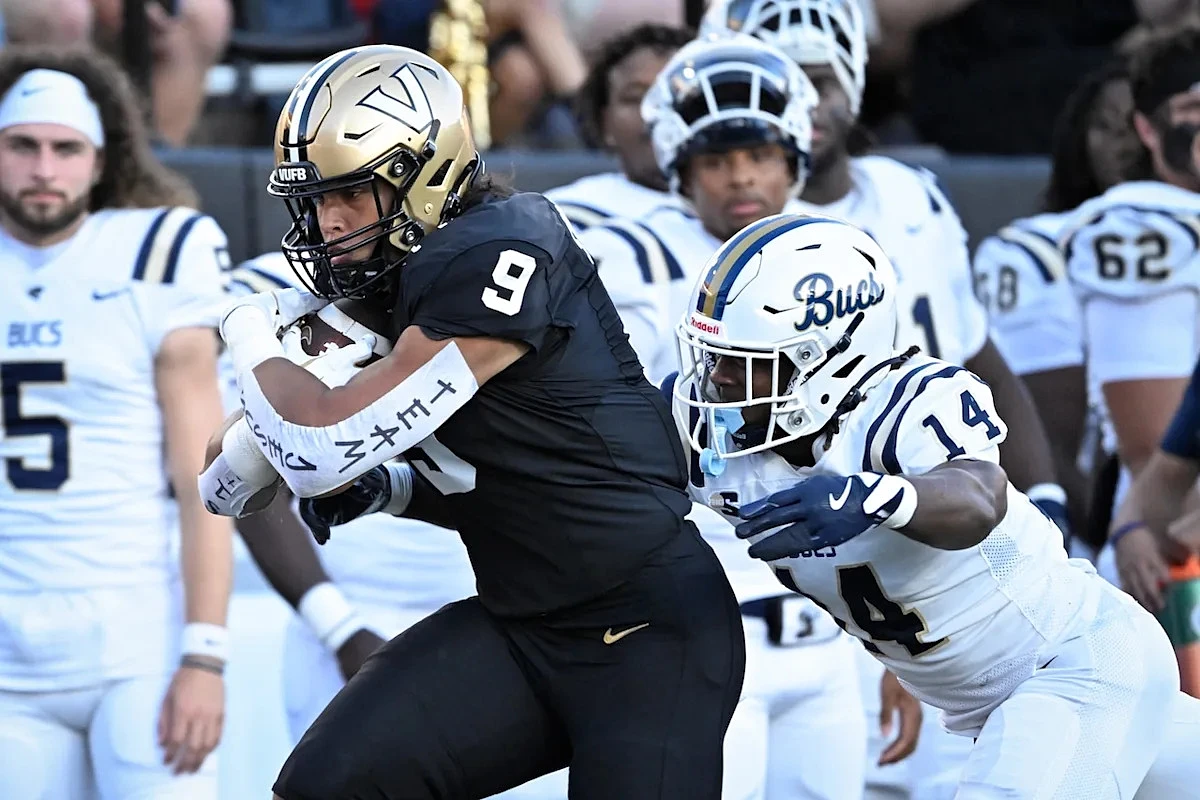
Five years ago, Eli Stowers was a promising four-star quarterback recruit at Texas A&M, but something felt off. He noticed his throws lacked power, and no matter how hard he tried, he couldn't push the ball downfield in practice. "I don't know what's going on, but I can't throw," he told his parents, worried and frustrated. His mother, Tina, recalled telling him, "You've played quarterback since you were 7, so you can't tell me you can't throw a football."
The truth was more serious: Stowers was playing through a torn labrum. Surgery followed his freshman season, and he missed most of his sophomore year recovering. It was a dark time—his mother described hearing the defeat in his voice, prompting his father to take a day just to take him out for dinner and support. But what seemed like an unlucky break turned into the turning point of his career.
After surgery, Stowers struggled with his throwing mechanics and never fully regained his confidence. He transferred to New Mexico State in 2023 hoping for a fresh start, but Heisman Trophy winner Diego Pavia beat him out for the starting quarterback job. Desperate for playing time, Stowers faced a harsh reality: he needed to move on from quarterback.
New Mexico State gave him that chance, shifting him to tight end on a part-time basis after the first month of the season. He finished that year with 35 catches for 366 yards and two touchdowns—and it only got better. In 2024, his first season at Vanderbilt, he snagged 49 receptions for 638 yards and five touchdowns, proving his versatility and athleticism.
That transformation paid off last week when the Philadelphia Eagles drafted Stowers with the 54th pick in the second round of the 2026 NFL Draft—as a tight end. For a player who once thought his career might be over, it's a testament to resilience and the power of reinvention. In a league where adaptability is key, Stowers turned rock bottom into an NFL future at a new position, and the Eagles might have just landed a complete steal.