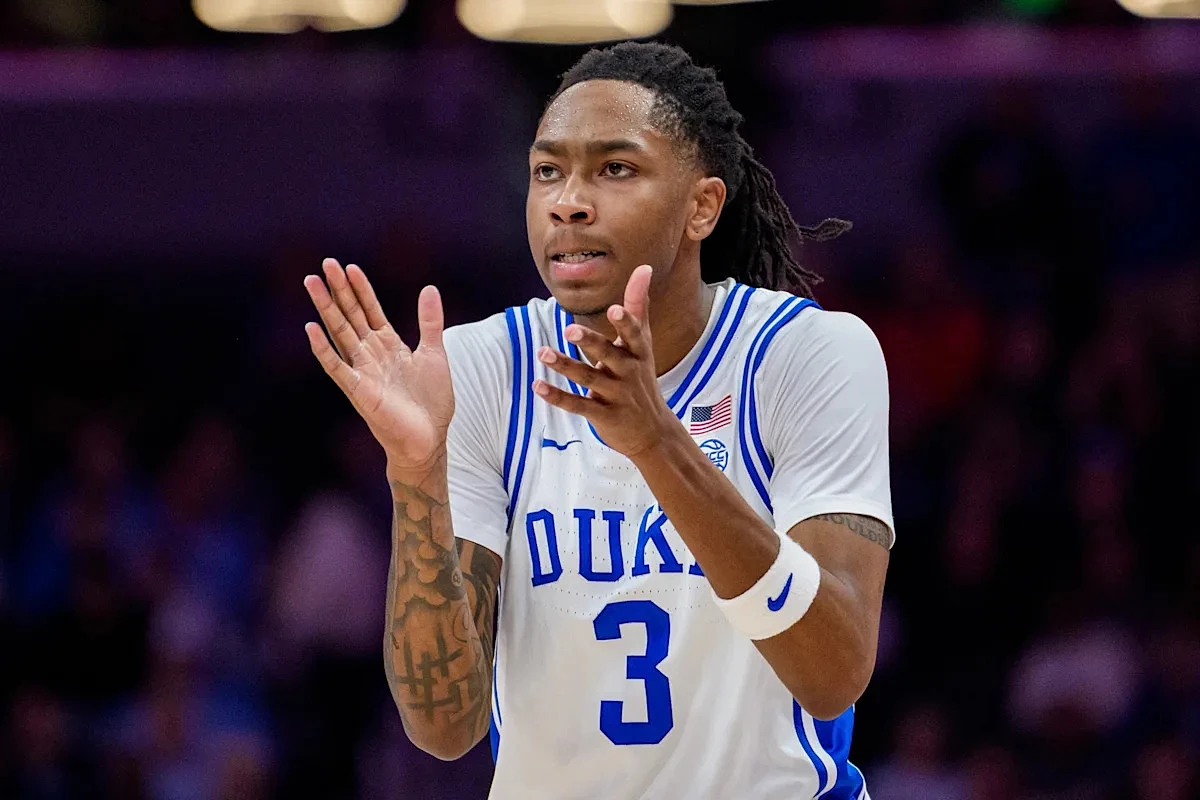
The college basketball landscape is shifting beneath our feet, and the decisions of star players like Duke's Isaiah Evans are at the epicenter. While the Blue Devils have seen rotation pieces enter the transfer portal, the biggest question mark hangs over the NBA Draft. While consensus top-three pick Cam Boozer is a lock to leave, the path for Evans—a projected first-rounder—is suddenly far more complex and intriguing.
Just a few years ago, a first-round projection made declaring for the draft an automatic decision. Today, rapidly expanding NIL budgets have turned the calculus upside down. Recent reporting indicates elite players in the transfer portal can command upwards of $3 million, with figures for top-tier guards potentially nearing $5 million. For a player of Evans' caliber, a conservative estimate might land around $4 million in NIL compensation for a return to college.
Here’s where it gets fascinating: that hypothetical $4 million NIL deal would actually exceed the first-year salary of an NBA rookie drafted outside the lottery. For a player projected in the mid-to-late first round—exactly where Evans is often slotted—choosing Duke could mean earning over $1 million more next season than he would on an NBA rookie contract. The financial incentive to develop further in college, while building his brand in a Duke jersey, has never been stronger.
Of course, the NBA dream isn't just about year-one salary. Players often aim to start their professional clock early to reach that lucrative second contract faster. But the risk-reward equation has fundamentally changed. Returning to school is no longer just about improving draft stock; it's a legitimate, high-value financial strategy. For Isaiah Evans and Duke, the decision is no longer a simple one. It's a complex negotiation between immediate NBA dreams and a potentially more lucrative present in college basketball's new era.