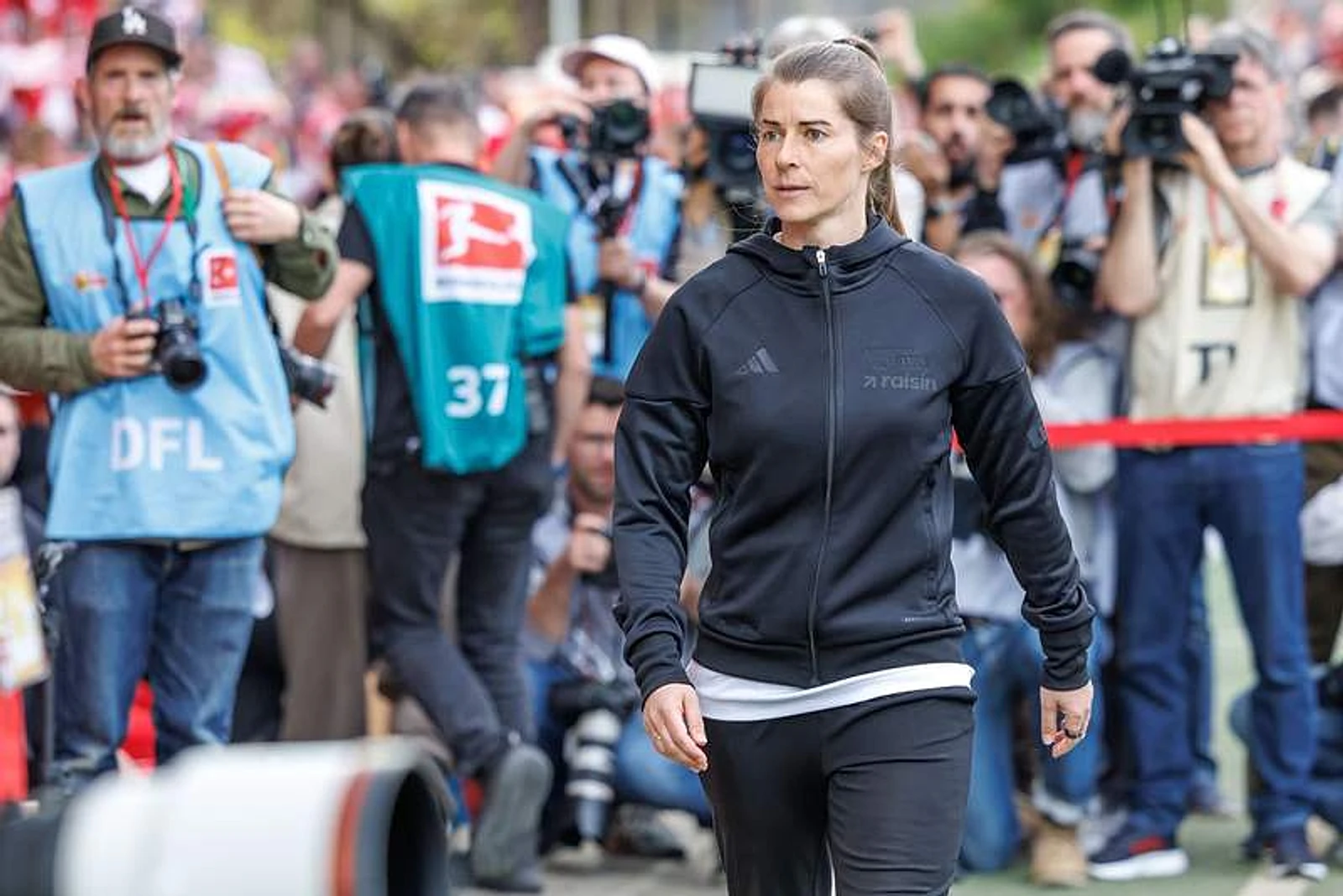
This past Saturday, the football world's attention was firmly fixed on the Bundesliga for a landmark moment. Marie-Louise Eta made her historic debut as head coach of Union Berlin, becoming the first woman to lead a men's team in one of Europe's top five leagues. The significance of the occasion resonated globally, pushing even the famed Superclásico preview off the homepage of Argentina's Olé, which declared it a "historic day for German football."
The atmosphere at Stadion An der Alten Försterei was electric. As described by Spain's Marca, a "deafening roar of jubilation" greeted Eta's emergence from the tunnel, with every photographer's lens capturing the revolutionary scene. She remained the center of attention, trailed by a swarm of media as she conducted pitch-side interviews, a visual testament to the breaking of a long-standing barrier in professional sports.
Despite the historic nature of her appointment, Eta herself kept the focus on the game, stating plainly, "It's not about me, it's about football." Her debut ended in a 2-1 loss to Wolfsburg, extending Union's winless run, but the players immediately felt a shift. Captain Christopher Trimmel pointed to a "new energy on the pitch," highlighting the team's 26 attempts on goal as a positive sign of her impact.
The week leading up to the match was not without its challenges, as Eta faced unwarranted sexist remarks online—a reminder of the outdated hurdles still present in the game. However, the support from within the club was clear. Forward Ilyas Ansah echoed a sentiment that should be universal in sports, saying, "I don't really care if it's a man or a woman. It doesn't change the way I wanna play games." This debut was more than a single match; it was a powerful step forward for the sport, celebrated internationally as a real revolution.