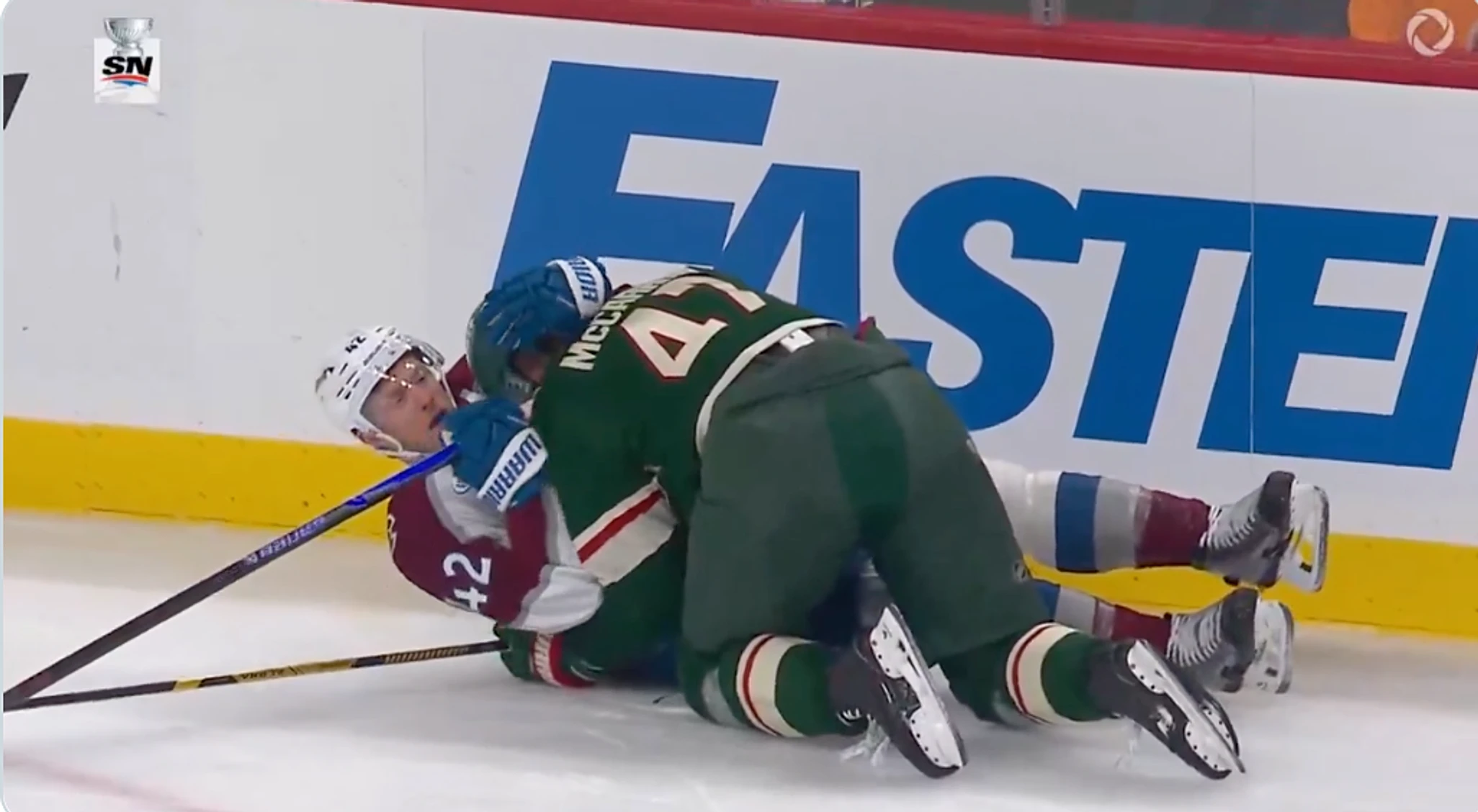
Tempers boiled over in St. Paul during Game 4 of the second-round playoff series between the Minnesota Wild and Colorado Avalanche, as a controversial stick infraction sparked heated debate and shifted momentum in a crucial matchup.
The drama began when Michael McCarron delivered a heavy hit to Avalanche defenseman Josh Manson, who was making his series debut after missing the first three games with an injury. As Manson went down, he pulled McCarron to the ice with him. Then came the moment that had everyone talking: with one arm wrapped around McCarron, Manson drove the butt-end of his stick directly into McCarron's ear area.
Initially, no penalty was called on the play. But officials Trevor Hanson and Jean Hebert huddled by the scorers' table before deciding to review the incident for a major penalty. After looking at the replay, the NHL determined that Manson attempted a butt-end but did not successfully complete it.
According to NHL Rule 58.5, an attempted butt-end warrants a double minor penalty, while a completed butt-end carries a five-minute major and automatic game misconduct. So Manson received two minutes instead of five, a decision that left the Wild fuming.
The timing couldn't have been worse for Minnesota. On the ensuing double-minor power play, Wild forward Danila Yurov capitalized, scoring to give his team a 1-0 lead heading into the first intermission. It was a pivotal goal in a game that carried enormous weight in the series.
After the period, an emotional Michael McCarron didn't hold back in his interview with ESPN. "I mean, you played against Josh. He's a dirty player. He's always been," McCarron said. "I'm happy he's still in the game." The comments added fuel to an already fiery rivalry, with fans and analysts debating whether the punishment fit the infraction.
For hockey fans who live for the intensity of playoff hockey, this moment encapsulated everything that makes the postseason special: raw emotion, controversial calls, and players leaving it all on the ice. Whether Manson's actions were intentional or accidental, the incident will be a talking point for the rest of the series—and a reminder that in the Stanley Cup Playoffs, every shift can change everything.